

Hey there, nail enthusiasts! As a supplier of nail sanding bands, I often get asked this question: Can nail sanding bands be used on artificial nails? Well, let's dive right in and find out.
First off, let's talk a bit about what nail sanding bands are. Nail sanding bands are these super - handy tools that come in different grits. They're kind of like the sandpaper you'd use for woodworking, but way smaller and made specifically for nails. You can find them in various shapes and sizes, and they're designed to fit onto nail drills.
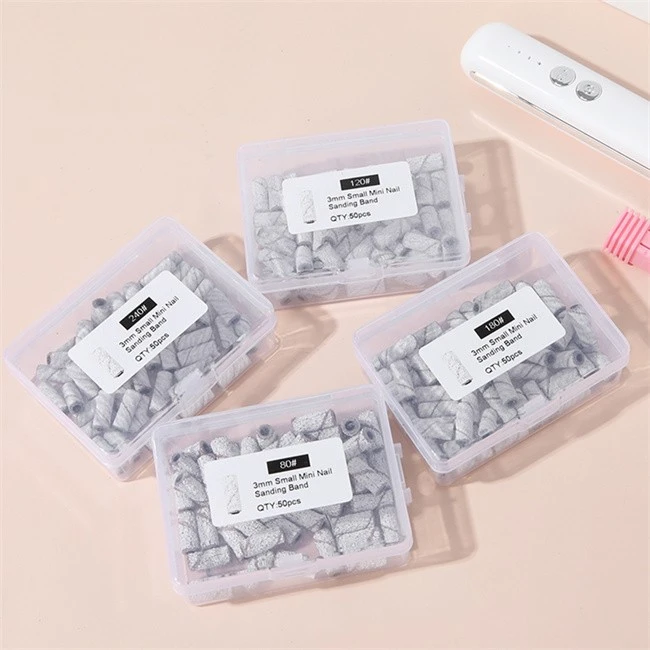

Now, artificial nails are a whole different ballgame compared to natural nails. They're made from materials like acrylic, gel, or fiberglass. These materials are much tougher than our natural nails, so they need a bit more oomph when it comes to shaping and smoothing. That's where nail sanding bands come in.
The short answer is yes, nail sanding bands can definitely be used on artificial nails. In fact, they're one of the best tools for the job. When you're applying artificial nails, you need to prep the natural nail surface to make sure the artificial nail adheres properly. Nail sanding bands are great for gently buffing the natural nail to create a rough surface for better adhesion.
After the artificial nail is applied, you'll probably want to shape it to your liking. Whether you're going for a square, oval, or stiletto shape, nail sanding bands can help you achieve that perfect look. They allow you to file down the edges of the artificial nail smoothly and precisely. You don't have to worry about chipping or cracking the artificial nail if you use the right grit and technique.
One of the key things to consider when using nail sanding bands on artificial nails is the grit. The grit of a sanding band refers to how coarse or fine it is. Lower grit numbers, like 80 or 100, are more coarse and are great for quickly removing large amounts of material. For example, if you're shortening a very long artificial nail or removing a thick layer of acrylic, a lower grit sanding band would be your best bet. You can check out 180 Grit Sanding Bands for a good mid - range option that can be used for both shaping and some light smoothing.
On the other hand, higher grit numbers, such as 220 or 320, are much finer and are used for smoothing and polishing the surface of the artificial nail. After you've shaped the nail with a lower grit sanding band, you can switch to a higher grit one to give the nail a nice, shiny finish. It's like the difference between roughing up a piece of wood with a coarse sandpaper and then finishing it off with a fine one for a smooth, polished look.
Another important aspect is the technique. When using nail sanding bands on artificial nails, you should always go slowly and gently. Don't press down too hard, or you could damage the artificial nail or even hurt your natural nail underneath. It's also a good idea to sand in one direction rather than back and forth. This helps prevent the nail from getting rough or frayed.
Now, let's talk about the different types of nail sanding bands available. There are Nail Sanding Bits, which are small, cylindrical sanding bands that are great for getting into tight spaces and doing detailed work. They're perfect for shaping the sides of the artificial nail or smoothing out small bumps.
Then there are Nail File Sanding Bands, which are more like traditional nail files but with the added benefit of being able to attach to a nail drill. These are great for larger areas and for general shaping and filing of the artificial nail.
One thing to keep in mind is that you should always clean your nail sanding bands after each use. Artificial nail materials can build up on the sanding bands, which can reduce their effectiveness over time. You can use a small brush or some nail polish remover to clean the sanding bands and keep them in good condition.
Using nail sanding bands on artificial nails also has some safety considerations. Make sure you're in a well - ventilated area when using nail sanding bands, especially if you're using them to remove acrylic or gel nails. The dust from the sanding can be harmful if inhaled. It's also a good idea to wear safety goggles to protect your eyes from any flying debris.
In addition to shaping and smoothing, nail sanding bands can also be used for removing old artificial nails. If you want to take off your acrylic or gel nails, a nail sanding band can help you break down the bond between the artificial nail and the natural nail. Just be careful not to sand too aggressively, as you don't want to damage your natural nail.
Overall, nail sanding bands are a must - have tool for anyone working with artificial nails, whether you're a professional nail technician or a DIY enthusiast. They offer a precise and efficient way to shape, smooth, and maintain artificial nails.
If you're interested in purchasing high - quality nail sanding bands for your artificial nail projects, don't hesitate to reach out. We've got a wide range of options to suit all your needs. Whether you're looking for a specific grit or a particular type of sanding band, we've got you covered. Contact us today to start a conversation about your nail sanding band needs and let's get you the perfect tools for your next nail art adventure!
References
- Personal experience as a nail sanding bands supplier
- Industry knowledge about nail care and artificial nails