

As a supplier of nail sanding bands, I understand the importance of providing high - quality products to our customers. With so many options available in the market, it can be challenging for consumers to determine whether a nail sanding band is of good quality. In this blog post, I will share some key factors that can help you make that assessment.
Abrasive Material
The abrasive material is the heart of a nail sanding band. Different types of abrasives offer varying levels of performance.
Aluminum Oxide
Aluminum oxide is one of the most commonly used abrasives in nail sanding bands. It is known for its durability and ability to provide a consistent sanding action. High - quality nail sanding bands made with aluminum oxide will have a uniform distribution of the abrasive particles. You can check this by looking at the surface of the band under good lighting. If the particles seem unevenly spread or there are large gaps, it may indicate a lower - quality product. Bands with well - bonded aluminum oxide abrasives will last longer and maintain their sanding efficiency over time. For example, our 180 Grit Sanding Bands are made with high - grade aluminum oxide, ensuring a smooth and long - lasting sanding experience.
Silicon Carbide
Silicon carbide is another popular abrasive material. It is sharper and more brittle than aluminum oxide, which makes it ideal for sanding harder materials. When evaluating a nail sanding band with silicon carbide, pay attention to how easily the abrasive breaks down. A good - quality band will break down in a controlled manner, continuously exposing fresh cutting edges. This results in a more efficient sanding process. However, if the abrasive chips off too quickly or in large chunks, it may be a sign of poor bonding or low - quality silicon carbide.
Grit Size
The grit size of a nail sanding band determines the coarseness of the sanding surface. Different grit sizes are suitable for different stages of nail preparation.
Coarse Grits (80 - 120)
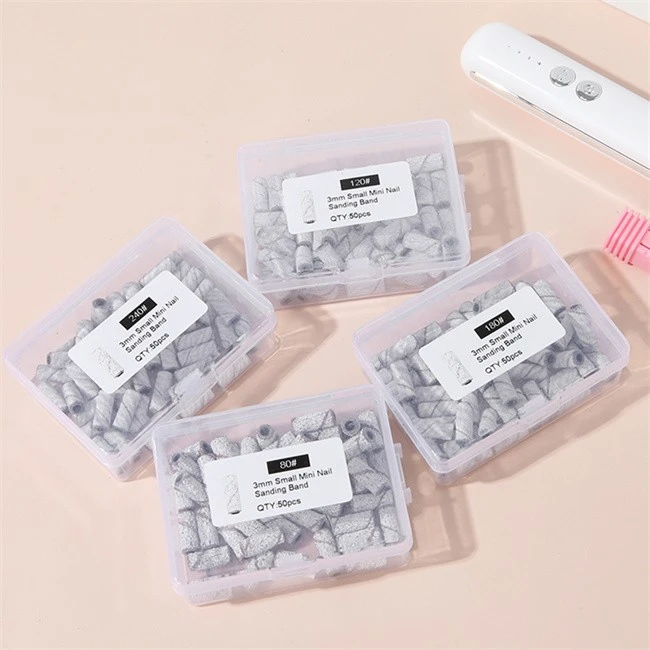
Coarse grit sanding bands are used for heavy material removal, such as shaping nails or removing thick layers of acrylic or gel. A high - quality coarse grit band should be able to cut through the material quickly without causing excessive heat or damage to the nail. If a coarse grit band feels dull or takes a long time to make any significant changes to the nail, it may not be of good quality.
Medium Grits (150 - 240)
Medium grit bands are used for smoothing the nail surface after shaping. They help to refine the shape and remove any rough edges left by the coarse grit band. A good medium grit band will leave a smooth finish on the nail without scratching it. You can test the quality of a medium grit band by sanding a small area of a practice nail. If the surface feels uneven or has visible scratches, the band may not be up to par. Our Different Sanding Bands for Nails offer a range of medium grit options to meet different needs.
Fine Grits (320 - 400)
Fine grit bands are used for the final polishing of the nail. They create a smooth and shiny surface. A high - quality fine grit band should be able to produce a mirror - like finish. If the band leaves a hazy or dull appearance on the nail, it may not be a good quality product.
Band Construction
The construction of the nail sanding band also plays a crucial role in its quality.
Backing Material
The backing material provides support for the abrasive. Common backing materials include paper, cloth, and film. Paper - backed bands are usually more affordable but may not be as durable as cloth or film - backed bands. Cloth - backed bands are flexible and can conform to the shape of the nail better. They are also more resistant to tearing. Film - backed bands are very smooth and can provide a consistent sanding surface. When evaluating a nail sanding band, check the backing material for any signs of weakness, such as tears or fraying. A good - quality band will have a strong and well - made backing.
Bonding
The bonding between the abrasive and the backing material is essential. A high - quality bond ensures that the abrasive particles stay in place during sanding. You can test the bonding by gently rubbing the sanding band against a hard surface. If a significant amount of abrasive comes off, the bonding is likely poor. In addition, bands with good bonding will not delaminate, which means the abrasive and the backing will not separate during use.
Flexibility
Flexibility is an important factor, especially when sanding curved or irregularly shaped nails. A good - quality nail sanding band should be flexible enough to bend around the nail without breaking or losing its sanding effectiveness. If the band is too rigid, it may be difficult to use on nails with a natural curve. On the other hand, if it is too flexible, it may not provide enough support for efficient sanding. Our Nail File Sanding Bands are designed to have the right amount of flexibility, making them suitable for a variety of nail shapes.
Sanding Performance
The ultimate test of a nail sanding band's quality is its performance during actual use.
Cutting Efficiency
A high - quality nail sanding band should cut through the nail material quickly and smoothly. It should not require excessive pressure to achieve the desired results. If you find yourself having to press down hard on the band to make any progress, it may be a sign of a dull or low - quality band.

Heat Generation
Excessive heat generation during sanding can damage the nail and cause discomfort to the client. A good - quality band will dissipate heat effectively, preventing overheating. You can monitor the temperature of the nail during sanding. If the nail becomes too hot to touch, the band may not be of good quality.
Dust Collection
Some nail sanding bands are designed to collect dust during the sanding process. This is important for maintaining a clean working environment and reducing the risk of inhaling dust particles. A high - quality band with dust - collection capabilities will be efficient at trapping dust and preventing it from spreading.
Durability
Durability is a key indicator of a nail sanding band's quality. A good - quality band should be able to withstand multiple uses without losing its effectiveness. You can evaluate the durability of a band by looking at its wear pattern. A high - quality band will wear evenly, maintaining its sanding performance over time. If the band shows signs of uneven wear, such as bald spots or excessive wear on one side, it may not be a durable product.
Conclusion
In conclusion, determining the quality of a nail sanding band involves considering multiple factors, including the abrasive material, grit size, band construction, flexibility, sanding performance, and durability. By carefully evaluating these aspects, you can ensure that you are purchasing a high - quality product. As a supplier of nail sanding bands, we are committed to providing our customers with the best - quality products. If you are interested in purchasing nail sanding bands or have any questions about our products, please feel free to contact us for further discussion and procurement negotiation.
References
- "Handbook of Abrasive Technology", CRC Press
- "Nail Care and Beauty: A Professional Guide", Professional Publishing