

Hey there! As a supplier of sanding band drill bits, I often get asked all sorts of questions about what these nifty tools can and can't do. One question that popped up recently is, "Is it possible to use a sanding band drill bit on ceramic?" Well, let's dive right into this topic and find out.
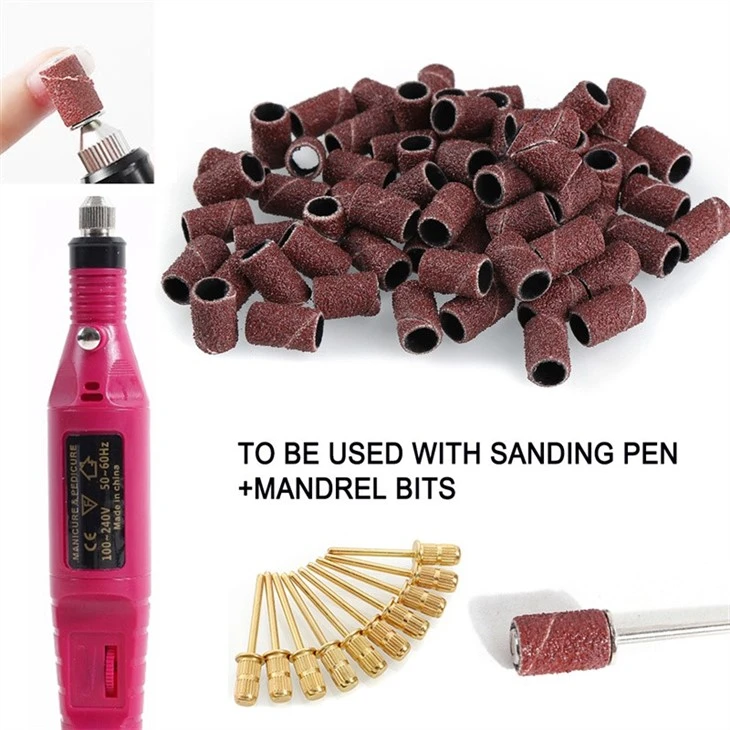
First off, let's talk a bit about sanding band drill bits. These things are pretty cool. They're versatile tools that can be used in a bunch of different applications. You might be familiar with Electric Nail File Sanding Bands or Nail File Sanding Bands. They're commonly used in the nail care industry to shape and smooth nails. But they also have other uses, and that's where the ceramic question comes in.
Ceramic is a hard and brittle material. It's made by heating clay and other materials at high temperatures, which gives it its unique properties. When you're thinking about using a sanding band drill bit on ceramic, you've got to consider a few things.
The Science Behind It
The way a sanding band drill bit works is by using the abrasive surface of the sanding band to wear down the material it's in contact with. The sanding bands come in different grits, like the ones in Different Sanding Bands for Nails. A lower grit means a coarser abrasive, which is better for removing larger amounts of material quickly. A higher grit gives a smoother finish but removes material more slowly.
When it comes to ceramic, the hardness of the material is a big factor. Ceramic has a high Mohs hardness, which means it's resistant to scratching and abrasion. So, using a sanding band drill bit on ceramic is possible, but it's not going to be as easy as using it on softer materials like wood or plastic.
Advantages of Using a Sanding Band Drill Bit on Ceramic
There are actually a few reasons why you might want to use a sanding band drill bit on ceramic. One big advantage is precision. Sanding band drill bits can be very precise, which is great if you're working on a small ceramic piece or need to make detailed cuts or smooth out a specific area.
Another advantage is that they can be used for both rough shaping and fine finishing. You can start with a lower grit sanding band to remove any excess material or shape the ceramic, and then switch to a higher grit for a smooth, polished finish.
Challenges and Considerations
But it's not all sunshine and rainbows. There are some challenges you'll face when using a sanding band drill bit on ceramic. The biggest one is the risk of cracking or chipping the ceramic. Because ceramic is brittle, applying too much pressure or using the wrong grit can cause it to break.
You also need to be careful about the heat generated during the sanding process. Friction between the sanding band and the ceramic can create heat, which can further weaken the ceramic and increase the risk of damage. To avoid this, you might need to take breaks during the sanding process to let the ceramic cool down.
Tips for Using a Sanding Band Drill Bit on Ceramic
If you decide to give it a go, here are some tips to help you out. First, start with a low speed on your drill. This will give you more control and reduce the risk of applying too much pressure.
Next, choose the right grit sanding band. For rough shaping, a 150 - 240 grit band might be a good choice. Once you're getting closer to the final shape, switch to a higher grit, like 320 - 400, for a smoother finish.

It's also a good idea to use a lubricant or coolant. This can help reduce heat and friction, and make the sanding process easier. You can use water or a specialized cutting fluid. Just make sure to keep the ceramic and the sanding band wet during the process.
Real - World Applications
There are actually a few real - world situations where using a sanding band drill bit on ceramic can be useful. For example, if you're a ceramic artist, you might use it to shape or finish a ceramic sculpture. You could also use it to repair a cracked or chipped ceramic piece.
In the home improvement world, it could be used to sand down the edges of a ceramic tile to make it fit better during an installation.
Safety Precautions
Safety should always be your top priority when using any power tool, and that includes sanding band drill bits. When working with ceramic, wear safety glasses to protect your eyes from flying ceramic particles. A dust mask is also a good idea to prevent you from inhaling any ceramic dust, which can be harmful if breathed in.
Conclusion
So, is it possible to use a sanding band drill bit on ceramic? The answer is yes, but it comes with its challenges. With the right technique, the right grit sanding band, and some patience, you can achieve great results.
If you're interested in trying out sanding band drill bits for your ceramic projects or other applications, we're here to help. We offer a wide range of sanding bands and drill bits to suit your needs. Whether you're a professional or a DIY enthusiast, we've got the tools you need to get the job done. If you have any questions or want to discuss your specific requirements, don't hesitate to reach out. We're always happy to have a chat and help you find the best solution for your project.
References
- General knowledge of ceramic materials and their properties.
- Experience as a sanding band drill bit supplier.
- Industry knowledge of sanding and drilling techniques.