

Hey there, fellow nail enthusiasts! If you're into professional nail care, you've probably heard of nail drill cuticle bits. As a supplier of these handy tools, I get asked a ton about the right pressure to use when working with them. Today, I'm gonna break it down for you.
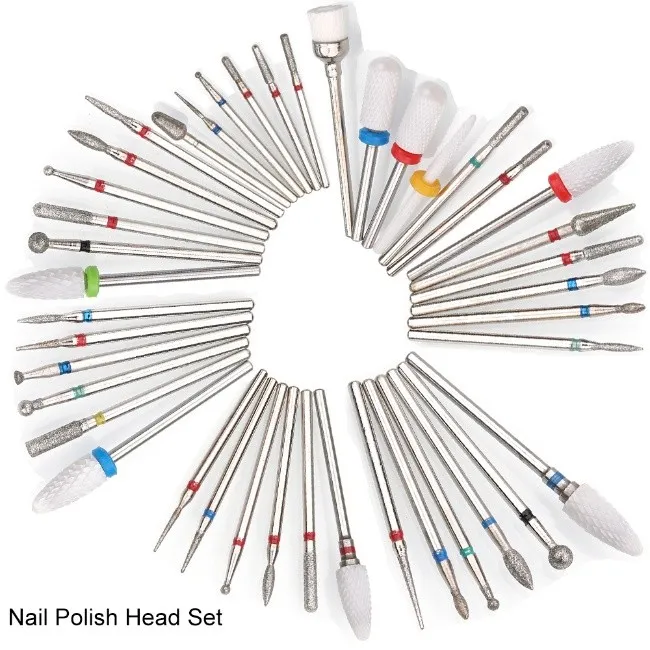
First off, let's talk a bit about nail drill cuticle bits. These bad boys come in all shapes and sizes, and they're super useful for cleaning up cuticles and prepping nails for polish or extensions. I'm a big fan of Nail Drill Cuticle Bit and Ceramic Cuticle Bit. They're durable and do an amazing job.
Now, the big question: what's the ideal pressure? Well, it's not an easy answer because it depends on a few factors. The type of bit you're using is a huge one. For example, a Barrel Nail Drill Bit might require a different pressure compared to a more pointed cuticle bit.
Let's start with the basics. When you're using a nail drill cuticle bit, you wanna start with a very light touch. Your goal is to remove the dead skin around the nails, not to damage the healthy tissue. Think of it like a gentle massage for your nails. If you press too hard right off the bat, you risk causing pain, bleeding, or even infections.
I usually tell people to treat the bit like it's made of glass. Use just enough pressure to make it do its job, but not so much that you're forcing it. The nails and cuticles are delicate areas, and applying excessive pressure can be like using a sledgehammer when a feather would do.
Another factor that affects the pressure is the speed of the nail drill. If you're using a high - speed setting, you can generally use less pressure. The bit is moving so fast that it can easily remove the dead skin without you having to push down hard. On the other hand, if you're on a low - speed setting, you might need to apply a bit more pressure, but still, keep it light.
Let me give you a little analogy. It's like mowing the lawn. If your lawnmower is running at full speed, you can just glide it over the grass. But if it's running slowly, you might have to put a bit more effort into pushing it forward. The same concept applies to nail drill cuticle bits.
Now, let's talk about the different areas around the nail. The cuticle area is the most sensitive. You should use the lightest pressure here. Just skim the bit over the edges of the cuticle, removing the excess dead skin. The side walls of the nails are a bit tougher, so you can use slightly more pressure, but still be careful not to go overboard.
The free edge of the nail, where you might be using the bit to shape or smooth, can handle a bit more pressure. However, you still don't want to press so hard that you're causing the nail to crack or split.
It's also important to pay attention to your client's (or your own) reaction. If they're wincing or saying it hurts, you're definitely using too much pressure. Stop immediately and adjust. Remember, the goal is to make the nail - care experience as painless and enjoyable as possible.
Practice makes perfect here. Even if you're a professional, you might need to take a bit of time to find the right pressure for each client and each type of bit. Don't be afraid to experiment on a small area first and see how it goes.

Now, I know some of you might be thinking, "This all sounds great, but how do I actually measure the pressure?" Well, unfortunately, there's no handy - dandy pressure gauge for nail drill bits. It's all about feel and experience. The more you use the bits, the better you'll get at gauging the right pressure.
Let's also touch on the importance of keeping your bit clean. A dirty bit can be less effective and might require more pressure to work. So, make sure to clean your bits regularly. You can use a brush and some nail - drill - bit cleaner to keep them in tip - top shape.
In addition to the right pressure, the angle at which you hold the bit also matters. You want to hold it at a gentle angle, almost parallel to the nail surface. This helps to ensure that you're only removing the dead skin and not digging into the healthy nail or cuticle.
If you're new to using nail drill cuticle bits, I recommend starting with a lower - grit bit. These are less abrasive and are more forgiving if you accidentally apply a bit too much pressure. As you get more comfortable, you can move on to higher - grit bits for a finer finish.
Finally, I wanna stress the importance of using high - quality bits. Cheaper bits might not be as sharp or durable, which can lead to you having to use more pressure to get the job done. That's why I always recommend our Nail Drill Cuticle Bit and Ceramic Cuticle Bit. They're made to last and do an excellent job with minimal pressure.
If you're in the market for high - quality nail drill cuticle bits, look no further. Whether you're a professional nail technician or a DIY nail lover, our products are sure to meet your needs. Reach out to us for more information and let's start a discussion about your next nail - drill - bit purchase.
References:
- Personal experience as a nail drill cuticle bit supplier
- Industry knowledge from working with professional nail technicians